
hey, hello, hi!
This weeks #WISW/#WomeninSTEMWednesday is from the absolutely incredible, inspiring Zoë!
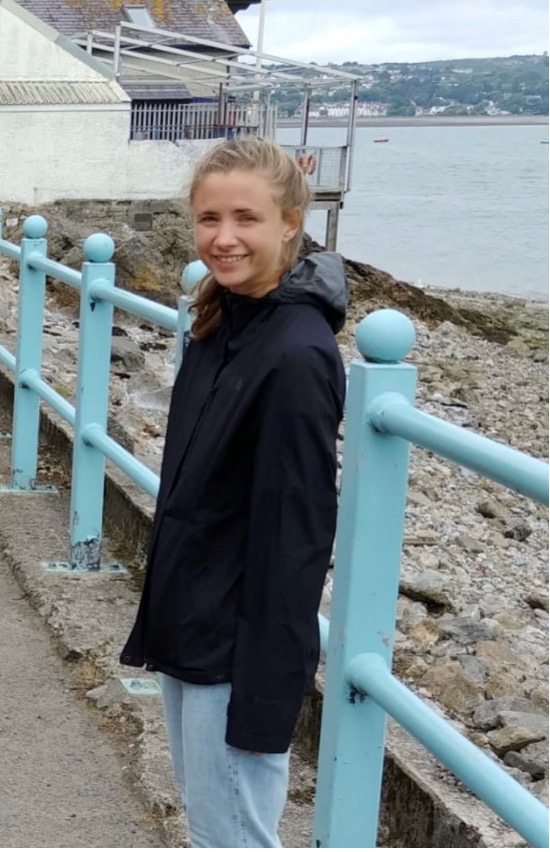
Hi!! I’m Zoë and I am 22 from London but I moved to Swansea in January to start my new job. I am a Trainee Clinical Scientist at Morriston Hospital where I am specialising in Rehabilitation Engineering. This is part of the NHS Scientist Training Programme (STP). I absolutely love my role and the opportunities it brings. I am also completing a part time Masters at Kings College London in Clinical Sciences. Alongside my job, I absolutely love spending time at the beach and do lots of surfing and other water sports which has meant moving to Swansea has been perfect! I did my undergrad in Medical Engineering at Cardiff which is where I met Meg!
What were you interested in at school, and why?
I really enjoyed school and I was fortunate to have really encouraging teachers who were passionate about ensuring women were able to have good accessibility into STEM. My favourite subject was DT Resistant Materials. I loved how practical it was and I honestly would have spent all my school time in the workshop if I could have! I got to learn about different design techniques, different types of machine and just be as creative as I could.
My love of maths grew throughout my school time. I really struggled with it initially but knew it was going to be fairly important if I wanted to go into engineering. I found it was quite logical and once I had learnt the processes, I started to get to grips with it and I became more interested. It is still something I find really hard and have to work to understand but luckily now I am in a job, the maths has become easier!
I really tried to be interested in physics during school. I thought I had to do physics in order to do engineering at university. Luckily I found courses which didn’t need it (much to my excitement!) so I dropped it as soon as I was able to.
Do you think outside interests/hobbies play an important role in encouraging more girls into STEM?
100%. It is all well and good learning the academic side about STEM but until you see real life applications you never really appreciate the impact it can have. STEM is everywhere, whether your hobby is sport, music or something else, STEM will have some sort of impact on it. Being curious and asking questions about your hobbies may just spark an interest into STEM. I was always interested in working with people with disabilities after doing various volunteering roles so I am so glad I found a job in which I was able to combine my degree and interest of working with people.
What pathway did you take to get into your job?
My official job title is Trainee Clinical Scientist. Clinical Scientists are all over the NHS and there are so many different types of clinical scientist from critical care to audiology to microbiology to genetics. I always think it is so interesting that clinical scientists are responsible for 80% of diagnoses made in the NHS. I am training to become a Clinical Scientist in Rehabilitation Engineering which covers a variety of different things including:
- gait analysis (looking at how people walk)
- specialist seating (designing and manufacturing custom wheelchairs)
- functional electrical stimulation (stimulating nerves that have been damaged to help people walk)
- assistive technology (technology helping communication and every day life)
Rehab engineers work in a multidisciplinary team with consultants, physios, occupational therapists and families to develop bespoke devices for patients with disabilities. It is a really patient focused role where we assess patients in clinics, design and then manufacture solutions. As a trainee I get loads of exposure to different activities and get incredible opportunities to spend time in other departments/ hospitals. This enables me to become aware of the whole patient pathways and other areas of clinical science.
What’s your favourite thing about your job and why?
I absolutely love my job and I feel so proud to look forward to going to work more and more every day.
My favourite thing is to be able to work so closely alongside patients the whole way through their episode of care. I have been taught to complete postural assessments to assess strength and range of motion, from this we are able to tailor the clinic to appropriately assess what the patient needs. I then get to process scans/measurements from the clinic on specialist computer software. We then manufacture solutions in the workshop and handover equipment to the patients in another clinic. It is amazing to see how solutions we produce have such a huge impact on peoples lives to increase their health and independence.
I don’t think I will ever forget the faces of families when their family member is able to walk for the first time in years.
What do you find most challenging about your job and why?
There is a lot going on and even more to learn which can be super intimidating. It can be hard to find the right balance of clinics, clinic notes, processing and manufacturing. I am learning to prioritise different activities which is definitely helping. I have also learnt the important skill of delegation and telling people when you have too much work. Being a trainee, my colleagues want to give me as many opportunities as possible, but it can be very overwhelming when there is so much to do.
There also seem to be thousands of acronyms to learn which I am only just starting to get to grips with 9 months in! It can often sound like a foreign language when people are talking in meetings about OWLS and MOLS to name a couple (Orthopaedic Wheelchair Loan Service and Mounting Of Life Support).
What does your day-to-day life look like while at work?
Every day is so different. I typically see one patient a day. Some appointments can take up to three hours. In the appointments we typically have to try different solutions until we find the best one. I am the lead of the custom moulded seating service so a lot of my role involves troubleshooting, scheduling appointments, processing scans and helping manufacture in the workshop. As a trainee I have to document my work through a number of competencies so this also takes a significant amount of time.
One of my favourite projects I am currently involved with is designing pressure relieving underwear. I never thought as an engineer in the NHS I would become a fashion designer too! In Swansea we have one of the only pressure ulcer services managed by engineers in the country. This helps us provide lots of bespoke equipment such as cushions and clothing. I am also involved in a research project to see if we can effectively change movement habits through technology to reduce the development of pressure ulcers.
I also get the opportunity to see different areas of the hospital just to increase my awareness of services. Last week I watched two open heart bypass surgeries which was a surreal experience and I have also spent days in the maxillofacial lab fitting people with prosthetic ears and noses.
In my office, day to day life also involves a lot of cake. We have a very social department in and out of work which I love and any excuse for cake or a trip to Costa goes!
Have you ever felt your gender has influenced the opportunities you’ve been offered and/or experienced so far?
I was really fortunate to go to a school that actively encouraged girls into STEM. We got to go on school trips to engineering companies and do presentations at the Royal Society. I think it is so good that in the last few years there has been a big drive to get girls into STEM as it means there is more space for girls to find their feet in the field and develop their interests. I have also been able to attend events which are specifically for females. I love these because you get to meet so many people with similar interests and make new friends. I feel lucky to have not experienced barriers because of my gender but I know there is still lots that needs to be changed.
What advice would you give to young girls who are interested in pursuing a STEM career?
Go for it, it will be one of the best decisions you make as the opportunities are endless. I always think its so cool that any object/activity you can think of was in some way influenced by someone working in STEM so don’t be afraid to be a change maker. Don’t be afraid of what others think. If someone tells you you shouldn’t do something because of who you are, prove them wrong if that’s what you want to do. Also connect with others in STEM, because peer support is so beneficial and will power you through the good and hard times.
Ahhhh Zoë, your job just sounds so wonderfully wholesome with a massive amount of job satisfaction. I remember when we visited the rehabilitation centre as part of uni in 3rd year and just being blown away by their (and now your!!) ability to quite literally change peoples lives.
I really loved hearing what a great support network you had during your time at school. I think it’s becoming one of the best ways of getting more girls into STEM. School is such a large, important portion of your life – at such an impressionable age too – that it makes sense to use it as a tool to allow STEM to be accessible to more people.
I also think trips are so important to give people an impression of what engineers (or other STEM titles) ACTUALLY do rather than having this preconception which is usually skewed by prejudices.
Also, can we talk about how you watched TWO open heart surgeries!? That is absolutely incredible! Not sure if you’re allowed to be jealous of that but damn, I DEFINITELY AM! What an amazing experience for you. It sounds like a really great environment to learn and progress in your career.
Zoë, I’ve loved reading your answers and I hope everyone else has enjoyed them as much as I have – thank you so much!
All my love, Meg x
P.S if the NHS Scientist Training Programme (STP) sounds like something you would be interested in, make sure you check out episode 3 of WISW – Women in STEM Wednesday: Lucy. Lucy is also part of the STP as a Medical Physicist – again a job that sounds SUPER interesting and diverse.

 Girls Who STEM